
Model churn in the Iranian Churn dataset
Use 3,150 customer records to study the binary churn label. The current saved network takes 13 inputs and is evaluated on 630 held-out records.
1. Business decision
Retention analysts can review which customer patterns associate with recorded churn and assess the cost of classification errors. Prediction alone does not determine who benefits from a retention intervention.
Customer context
Use the updated Iranian dataset schema.
Threshold trade-off
Inspect missed churn and unnecessary contacts.
Action evidence
Evaluate retention interventions independently.
2. Data set
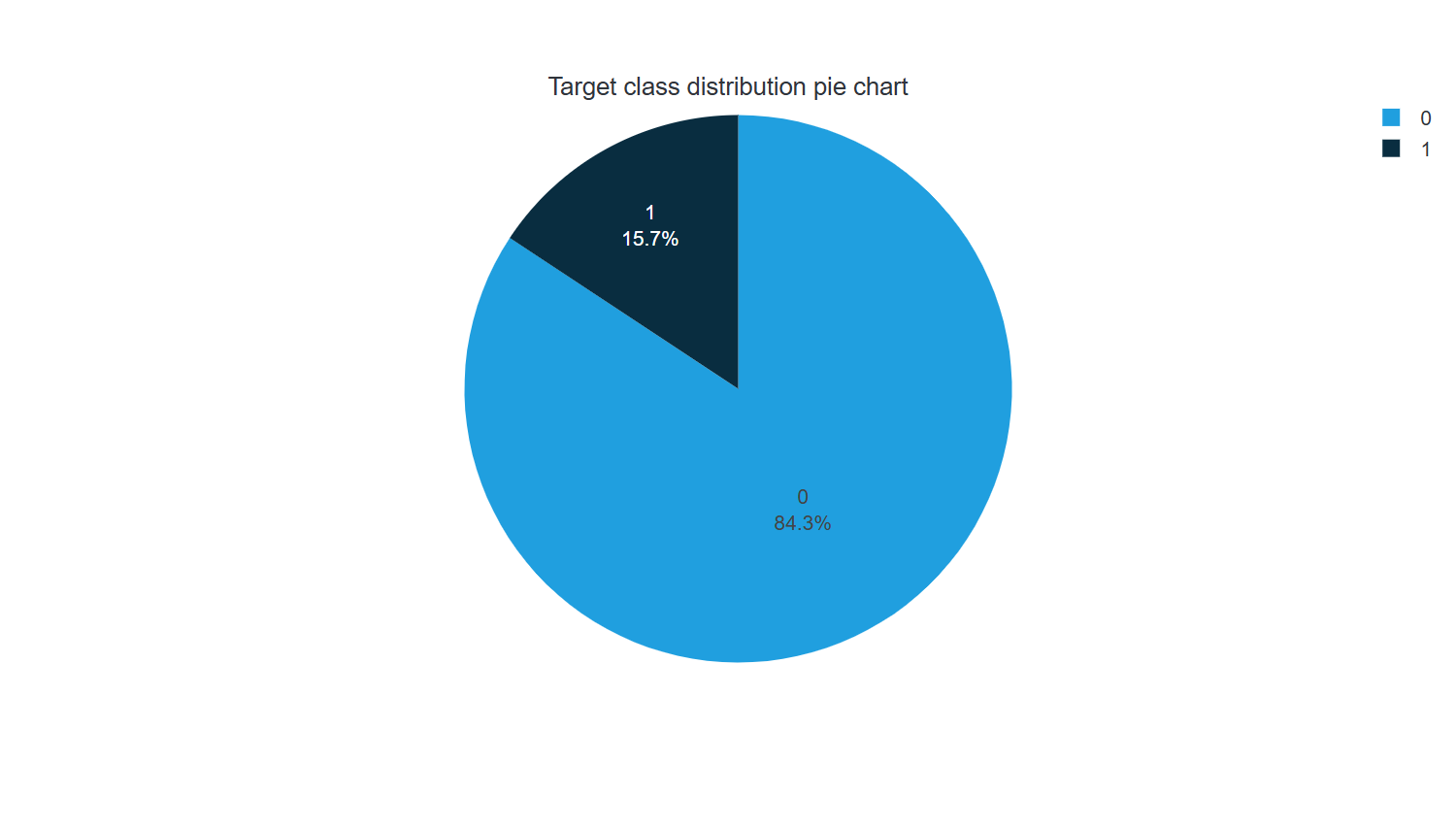
The UCI Iranian Churn Dataset replaces the previous telephone-usage table. Inputs include call failures, complaints, subscription length, usage, tariff, status, age and customer value. Churn = 1 is the positive class.
Source: Iranian Churn Dataset. Dataset license: CC-BY-4.0. The downloadable ZIP includes the adapted data and attribution notices.
| Dataset measure | Saved value |
|---|---|
| Analysis unit | customer record |
| Records | 3,150 |
| Raw variables | 14 |
| Encoded model inputs | 13 |
| Model outputs | 1 |
| Training roles | 1890 |
| Validation / selection roles | 630 |
| Testing roles | 630 |
| Unused roles | 0 |
| Field | Role | Type | Categories |
|---|---|---|---|
| Call Failure | Input | Numeric | |
| Complains | Input | Binary | 0, 1 |
| Subscription Length | Input | Numeric | |
| Charge Amount | Input | Numeric | |
| Seconds of Use | Input | Numeric | |
| Frequency of use | Input | Numeric | |
| Frequency of SMS | Input | Numeric | |
| Distinct Called Numbers | Input | Numeric | |
| Age Group | Input | Numeric | |
| Tariff Plan | Input | Numeric | |
| Status | Input | Numeric | |
| Age | Input | Numeric | |
| Customer Value | Input | Numeric | |
| Churn | Target | Binary | 0, 1 |
3. Model
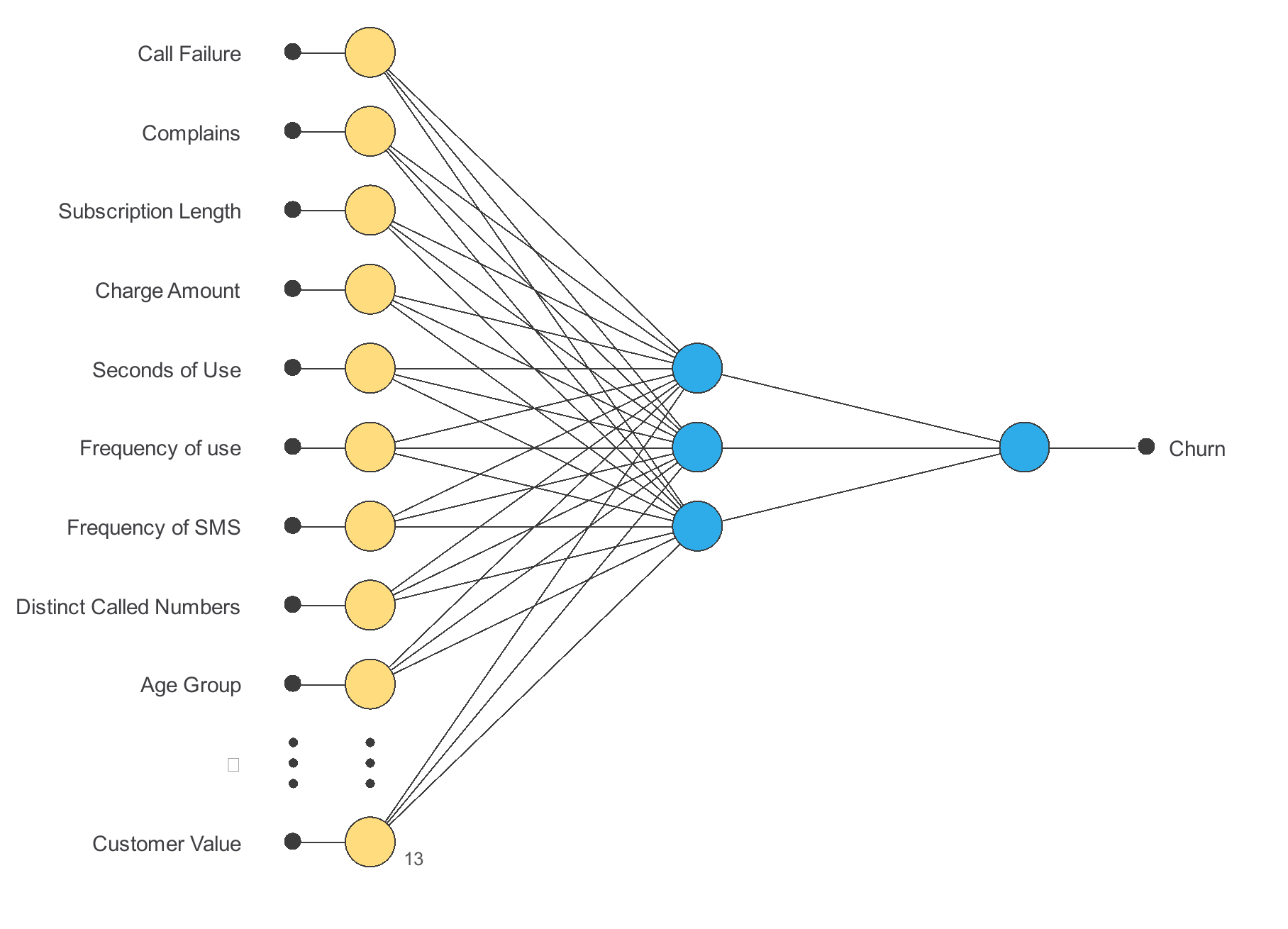
The model has 13 encoded inputs and 1 outputs. No architecture-selection experiment is recorded in this project. The diagram shows the topology used by the saved model.
| Layer | Input shape | Output shape | Activation |
|---|---|---|---|
| Scaling | 13 | 13 | |
| Dense | 13 | 3 | Tanh |
| Dense | 3 | 1 | Sigmoid |
Output values are uncalibrated model scores. For binary evaluation, the saved positive class is 1.
4. Training strategy
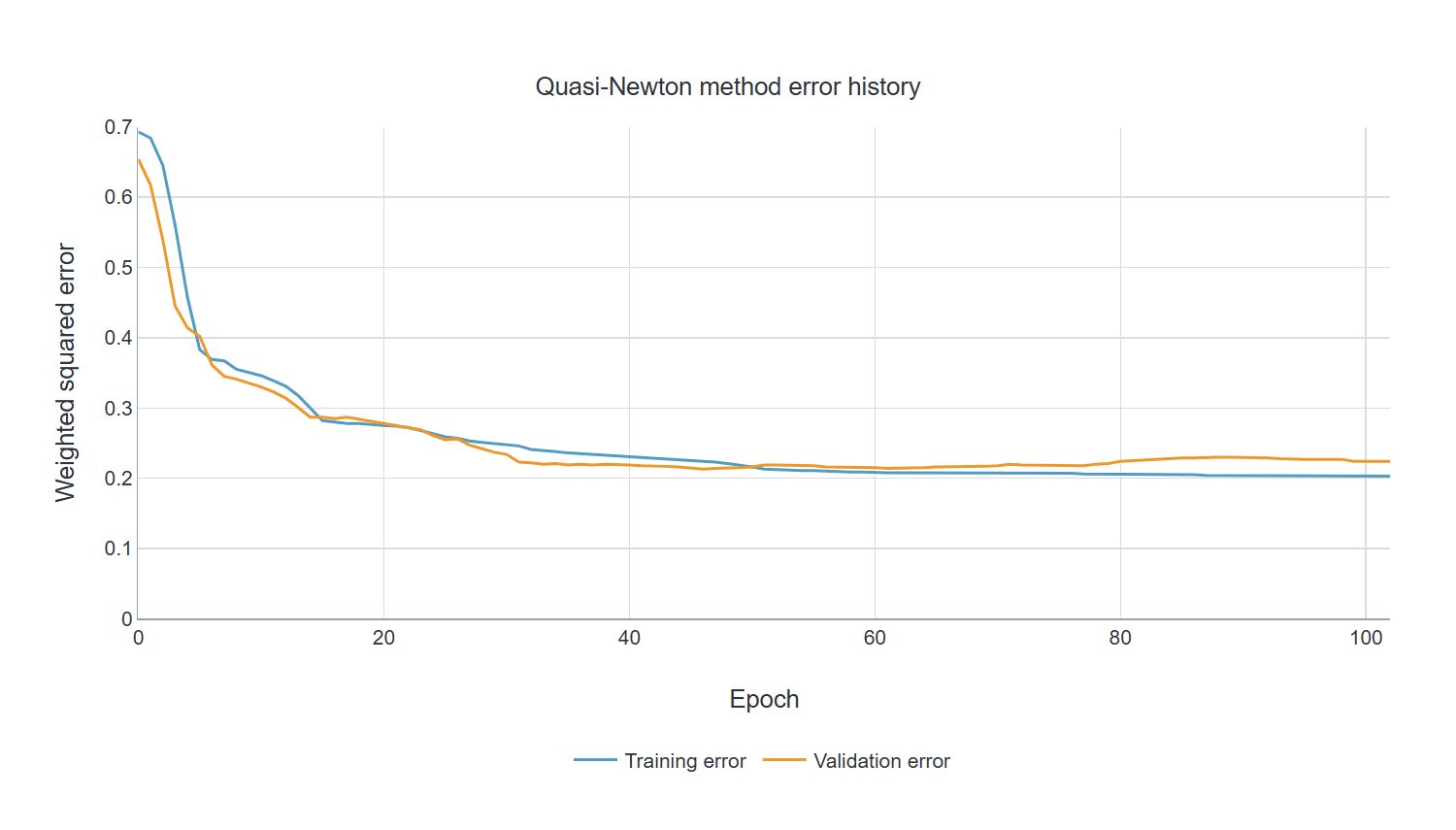
The saved training configuration uses QuasiNewton with WeightedSquaredError.
Quasi-Newton method results
| Measure | Value |
|---|---|
| Epochs number | 103 |
| Elapsed time | 00:00:00 |
| Stopping criterion | Minimum loss decrease |
| Training error | 0.225 |
| Validation error | 0.213 |
5. Model selection
No model selection experiment is recorded for this version. The validation subset guides fitting where a training report is present; it is distinct from the held-out test rows.
On this test subset a majority-class baseline would correctly classify 85.24% of the records. This baseline does not detect both classes and is not an optimized model.
6. Testing analysis
The figures and tables below refer to the current project’s saved testing analysis. The subset uses testing role 2; it contains 630 source records.
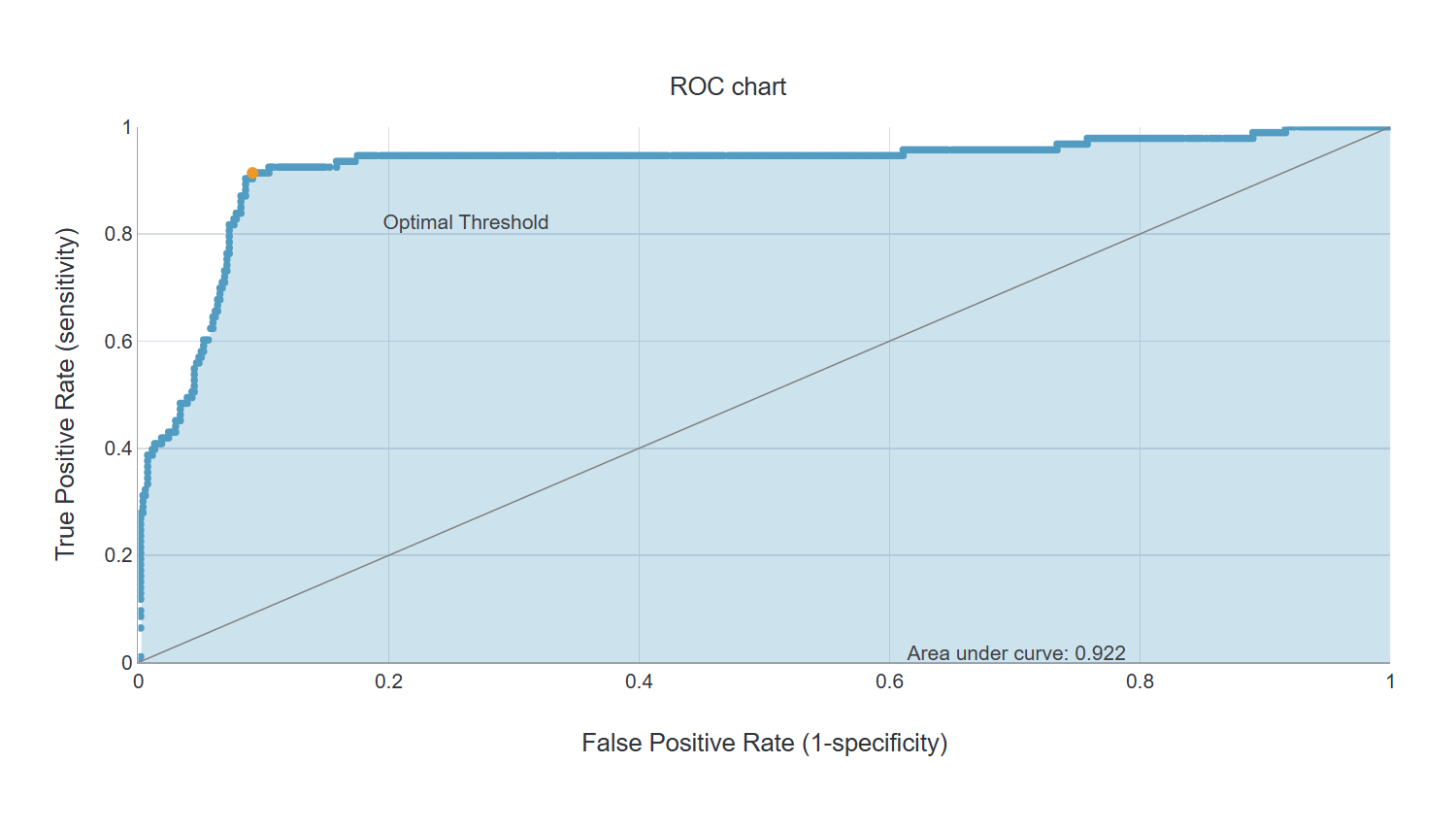
ROC AUC describes ranking on this testing subset. Any optimal threshold shown in the saved ROC report was selected descriptively on that same subset; it is not an independently validated operating policy.
These operating-point metrics are calculated from the saved confusion counts at threshold 0.5. The positive-label coding is stated in the model section.
Confusion table
| Measure | Predicted positive | Predicted negative | Total |
|---|---|---|---|
| Actual positive | 85 (13.5%) | 8 (1.3%) | 93 (14.8%) |
| Actual negative | 52 (8.3%) | 485 (77.0%) | 537 (85.2%) |
| Total | 137 (21.7%) | 493 (78.3%) | 630 (100.0%) |
| Test measure | Value |
|---|---|
| Testing records | 630 |
| Positive cases | 93 |
| Positive prevalence | 14.76% |
| Accuracy | 90.48% |
| Sensitivity / recall | 91.40% |
| Specificity | 90.32% |
| Precision / PPV | 62.04% |
| F1 score | 0.739 |
Area under curve
| Measure | Value |
|---|---|
| Area under curve | 0.922 |
7. Model deployment
Open the downloaded project in Neural Designer, inspect the dataset roles and preprocessing, then review the saved task report. Use the same input schema and category order when calculating outputs. The ZIP contains the exact current .nd, its source data and the applicable dataset notices.
Workflow: source measurements → schema and availability checks → model output → domain review. Keep model versions, validation evidence and incoming-data monitoring together.
8. Evidence and limitations
Check when complaints, account status and customer value become available relative to the churn label before prospective use. Random row testing does not establish transfer to later periods or other operators. Review calibration, subgroup performance and intervention costs separately.
References
- Iranian Churn Dataset. Ali Dehghan. 10.24432/C5JW3Z
- Dataset terms: Creative Commons Attribution 4.0 International. Full attribution and transformations are included in
LICENSES/DATASET-LICENSE.txt. - Current Neural Designer project and saved task report, snapshot 6 October 2026.